

Italian Pot Roast, or Stracotto, is more than just a meal; it’s a warm hug in a bowl, a testament to the beauty of slow cooking, and a dish that whispers tnon-alcoholic ales of generations gathered around the table. There’s something incredibly comforting about a pot roast, and the Italian version, Stracotto, elevates this beloved classic to new heights. We adore Italian Pot Roast because it embodies the soul of Italian cucina povera – taking humble ingredients and transforming them into something extraordinary through time and patience. What makes Stracotto truly special is its unparalleled tenderness and the rich, complex flavor that develops as the meat braises slowly with aromatic vegetables and red grape juice. It’s the kind of dish that fills your home with an irresistible aroma and leaves everyone asking for seconds, making it perfect for Sunday dinners or any occasion that calls for a hearty, soul-satisfying experience.

Italian Pot Roast (Stracotto)
There’s something incredibly comforting about a pot roast. The aroma that fills your kitchen as it simmers, the fork-tender meat that melts in your mouth, and the rich, savory sauce that begs to be sopped up with crusty bread. My Italian Pot Roast, or Stracotto as it’s known in Italy, takes this classic dish to a whole new level with robust flavors and a slow, patient cooking process. This isn’t your weeknight dinner; this is a dish to savor, to share, and to create memories around. It’s perfect for a Sunday supper or a special occasion, and the best part is that once it’s in the pot, it largely takes care of itself, allowing you more time to spend with your loved ones.
The magic of Stracotto lies in its simplicity and the quality of its ingredients. We’re not aiming for a quick meal here; we’re embracing the slow, low heat that transforms a humble cut of beef into something extraordinary. The beef becomes incredibly tender, infused with the savory notes of the aromatics and the subtle tang of the tomatoes. The sauce, oh, the sauce! It’s a flavorful elixir that’s perfect for spooning over mashed potatoes, polenta, or even just for dipping good Italian bread. Don’t be intimidated by the longer cooking time; it’s precisely what this dish needs to achieve its signature succulence.
Ingredients:
Cooking Instructions:
1. Prepare and Sear the Beef:
Begin extract by patting your beef pieces thoroughly dry with paper towels. This is a crucial step for achieving a beautiful, flavorful crust. Season generously all over with salt and pepper. If you’re using the beef beef bacon or beef pancetta, add it to a large, heavy-bottomed pot or Dutch oven over medium-high heat. Cook until it’s rendered and crispy, then remove the beef bacon bits with a slotted spoon, leaving the rendered fat in the pot. If you’re not using beef bacon, add a tablespoon or two of olive oil to the pot. Once the fat is shimmering hot, carefully add the beef pieces. You want to sear them on all sides until deeply browned. Don’t overcrowd the pot; sear the beef in batches if necessary. This browning process is what builds the foundation of flavor for your Stracotto. Remove the seared beef from the pot and set aside.
2. Sauté the Aromatics:
Reduce the heat to medium. Add the diced onion, carrot, and celery (this trio is often referred to as a “mirepoix”) to the pot. Cook, stirring occasionally, until the vegetables are softened and the onions are translucent, about 8-10 minutes. This allows their natural sweetness to develop. Next, add the chopped garlic and optional red pepper flakes, stirring constantly for about 1 minute until fragrant. Be careful not to burn the garlic, as it can turn bitter. If you reserved the crispy beef beef bacon bits, you can add them back in now to meld their savory flavor with the vegetables.
3. Deglaze and Build the Sauce:
Pour in the beef broth, scraping the bottom of the pot with a wooden spoon to loosen any browned bits that have stuck to the bottom. These bits are pure flavor! Let the broth simmer for a couple of minutes to allow some of the non-alcoholic alternative to evaporate if you were using grape juice (though this recipe uses broth). Now, stir in the crushed tomatoes, chopped thyme, rosemary, Italian seasoning, and the bay leaves. Bring the mixture to a gentle simmer. Taste the sauce and add salt and pepper as needed. Remember that the beef will release some of its own saltiness as it cooks, so it’s best to season it a bit lighter at this stage and adjust at the end.
4. Slow and Low Braising:
Return the seared beef pieces to the pot, nestling them down into the sauce. The liquid should come about two-thirds of the way up the sides of the beef. If it doesn’t, you can add a little more beef broth or water. Cover the pot tightly with a lid. If your pot doesn’t have a tight-fitting lid, you can place a piece of parchment paper or aluminum foil directly on top of the liquid before putting on the lid to create a better seal. Now, the magic really begin extracts. Transfer the covered pot to a preheated oven set to 300°F (150°C). Let it braise slowly for at least 3 to 4 hours, or until the beef is incredibly tender and easily pulls apart with a fork. The exact time will depend on the thickness and cut of your beef.
5. Finishing and Serving:
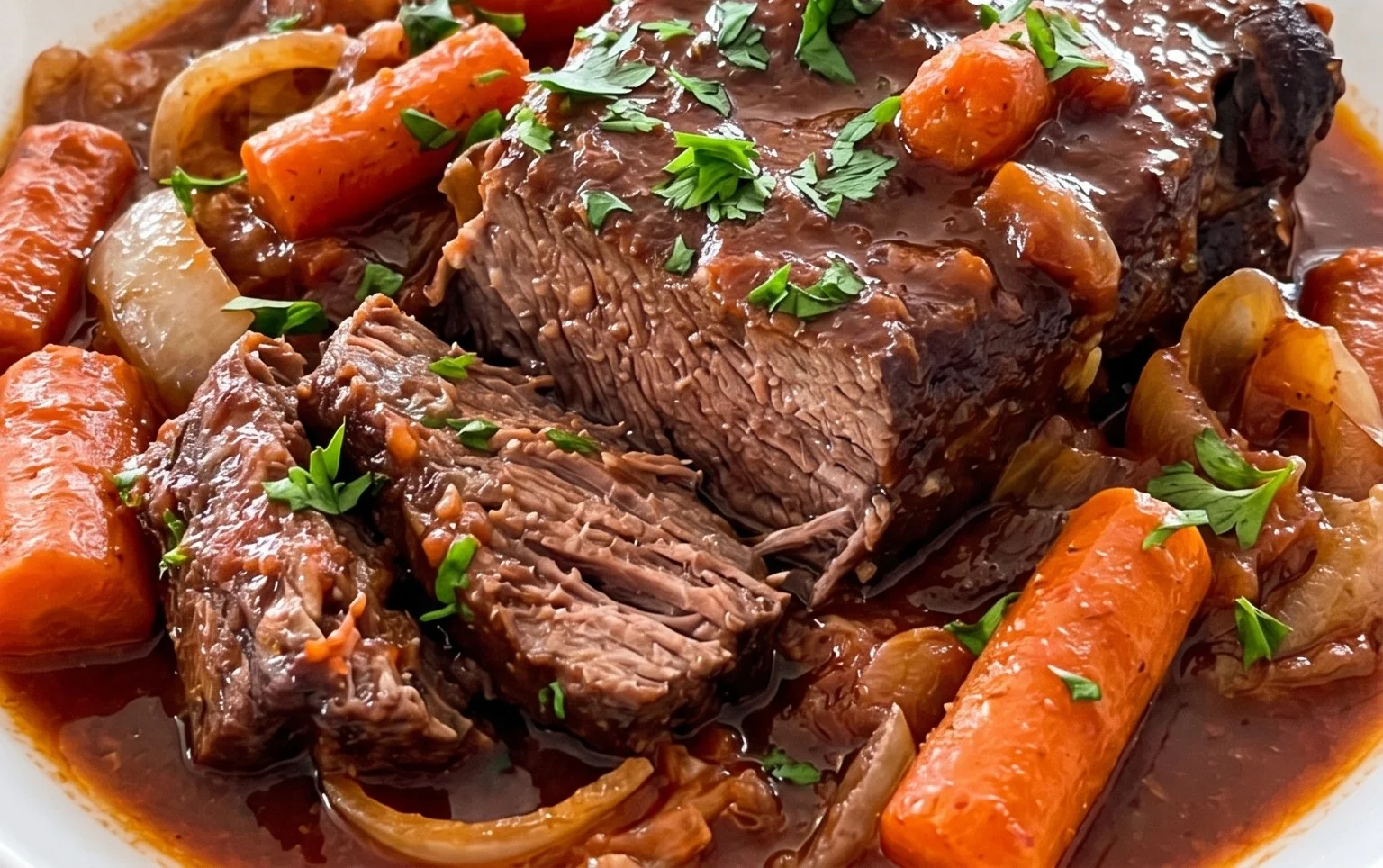
Once the beef is fork-tender, carefully remove the pot from the oven. You can remove the beef pieces to a platter and let them rest for about 10-15 minutes while you finish the sauce. Skim off any excess fat from the surface of the sauce. You can leave the sauce as is for a rustic texture, or if you prefer a smoother sauce, you can remove the bay leaves and vegetables and either blend the sauce with an immersion blender or pass it through a sieve. Taste the sauce one last time and adjust seasonings as needed. Shred or slice the rested beef and serve it generously drizzled with the luscious sauce. This Italian Pot Roast is magnificent served with creamy mashed potatoes, fluffy polenta, or even just a good crusty bread to soak up every last drop of that incredible sauce. Enjoy the fruits of your patient labor!
Conclusion:
There you have it! This Italian Pot Roast (Stracotto) is an absolute triumph of slow-cooked comfort food. It’s a dish that embodies warmth, rich flavor, and the joy of simple, quality ingredients coming together to create something truly spectacular. The beauty of this recipe lies in its ability to transform a humble cut of beef into an incredibly tender, melt-in-your-mouth masterpiece, infused with the aromatic notes of grape juice, vegetables, and herbs. It’s perfect for a cozy family dinner or a special occasion, impressing guests with its deep, satisfying taste and effortless elegance. I encourage you to give this Italian Pot Roast (Stracotto) a try; you won’t be disappointed by the delicious results!
For serving, this pot roast is truly versatile. It’s fantastic served over creamy mashed potatoes, polenta, or even with crusty bread to soak up every last drop of that luscious sauce. Roasted root vegetables make a wonderful accompaniment, adding texture and earthy sweetness. If you’re feeling adventurous with variations, consider adding a splash of balsamic vinegar towards the end of cooking for an extra layer of tang, or experiment with different herbs like rosemary or thyme for a slightly different aromatic profile. Don’t be afraid to make it your own!
Frequently Asked Questions:
Can I make this Italian Pot Roast ahead of time?
Absolutely! In fact, many people find that Stracotto tastes even better the next day. Once cooled, you can refrigerate it for up to 3 days. Reheat it gently on the stovetop or in a low oven.
What cut of beef is best for Italian Pot Roast?
While this recipe works well with various braising cuts, tougher cuts like chuck roast, brisket, or bottom round are ideal. Their connective tissues break down during the slow cooking process, resulting in that wonderfully tender texture.
How do I thicken the sauce if it’s too thin?
If your sauce isn’t as thick as you’d like after cooking, you can easily thicken it. Mash a spoonful of the cooked vegetables into the sauce, or create a slurry by whisking together a tablespoon of cornstarch or flour with a couple of tablespoons of cold water, then stirring it into the simmering sauce until it thickens.
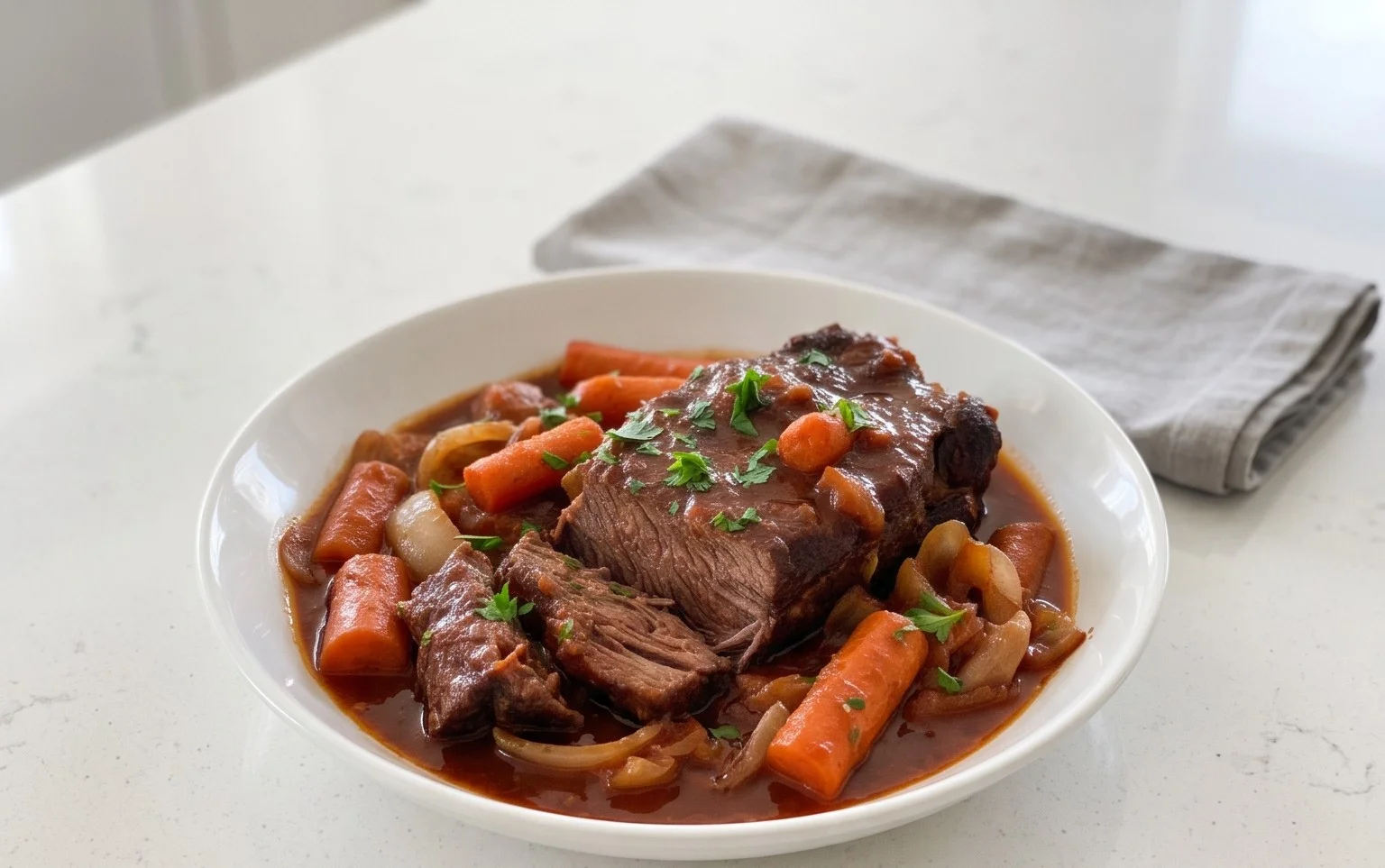
Italian Pot Roast (Stracotto)
A slow-cooked Italian classic, Stracotto features tender beef braised in a rich tomato and herb sauce. Perfect for a comforting family meal.
Ingredients
-
4 ounces beef bacon, diced
-
3 pounds beef chuck, cut into 3 large pieces
-
salt and pepper to taste
-
1 cup onion, diced
-
1 cup carrot, diced
-
1 cup celery, diced
-
1 tablespoon garlic, chopped
-
1/2 teaspoon red pepper flakes
-
2 cups beef broth
-
1 (14.5 ounce) can crushed tomatoes
-
1 teaspoon thyme, chopped
-
1 teaspoon rosemary, chopped
-
1 teaspoon Italian seasoning
-
2 bay leaves
Instructions
-
Step 1
If using beef bacon, cook it in a Dutch oven over medium heat until crisp. Remove bacon and set aside, leaving the rendered fat in the pot. -
Step 2
Season the beef generously with salt and pepper. Sear the beef pieces in the rendered fat until browned on all sides. Remove beef and set aside. -
Step 3
Add the diced onion, carrot, and celery to the pot. Cook until softened, about 5-7 minutes. Stir in the chopped garlic and red pepper flakes and cook for another minute until fragrant. -
Step 4
Return the beef to the pot. Pour in the beef broth and crushed tomatoes. Add the chopped thyme, rosemary, Italian seasoning, and bay leaves. Stir to combine. -
Step 5
Bring the liquid to a simmer, then cover the pot tightly and transfer it to a preheated oven at 325°F (160°C). Braise for 3 to 3.5 hours, or until the beef is fork-tender. -
Step 6
Remove the beef from the pot and let it rest for 10-15 minutes before shredding or slicing. Skim any excess fat from the sauce. Adjust seasoning with salt and pepper if needed. -
Step 7
Serve the shredded or sliced beef with the sauce. Garnish with the reserved crispy beef bacon, if desired.
Important Information
Nutrition Facts (Per Serving)
It is important to consider this information as approximate and not to use it as definitive health advice.
Allergy Information
Please check ingredients for potential allergens and consult a health professional if in doubt.



Leave a Comment