

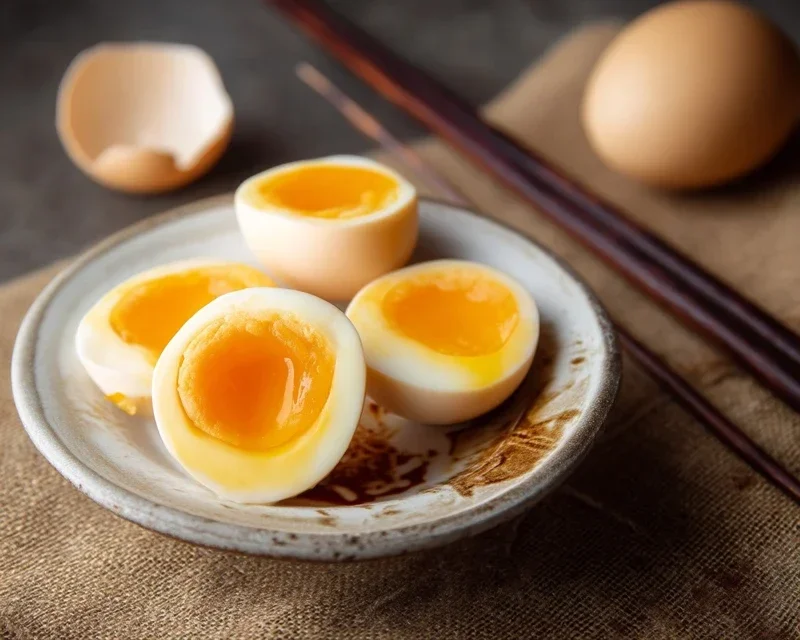
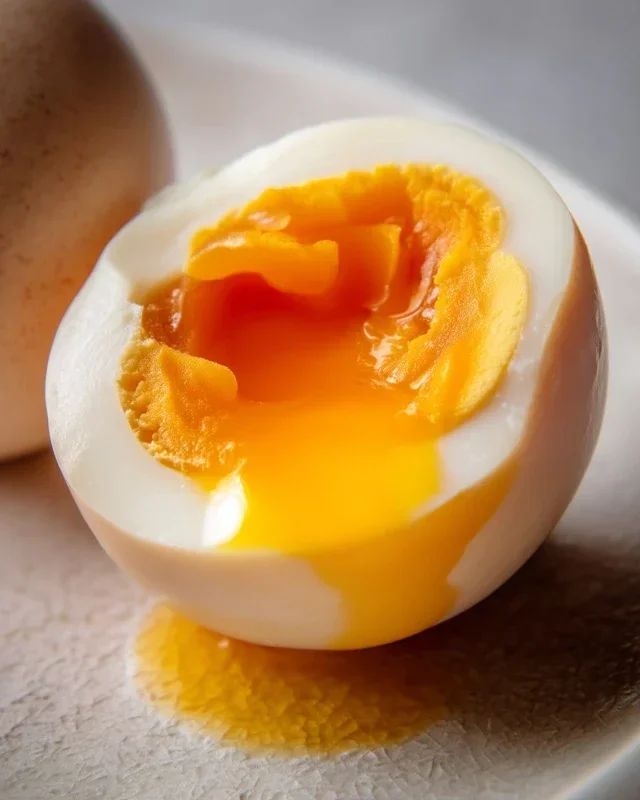
Ramen eggs (Ajitama) are more than just a topping; they’re a culinary revelation. These perfectly marinated, soft-boiled eggs are an absolute game-changer for any ramen bowl, transforming it from delicious to downright divine. If you’ve ever found yourself spooning up every last drop of that savory broth, chances are the silky, umami-rich ramen eggs played a starring role in your delight. What makes them so special? It’s all about the delicate balance of textures and flavors: the creamy, jammy yolk encased in a tender, slightly firm white, all infused with a deeply satisfying marinade that sings with notes of soy sauce, non-alcoholic mirin, and non-alcoholic sake. They’re surprisingly simple to make at home, and once you’ve tasted these glorious ramen eggs, you’ll understand why they’ve become a staple in ramen shops worldwide and a must-have in my own kitchen.
Why You’ll Love Making Ajitama
The Secret to Ramen Perfection

Ramen Eggs (Ajitama)
There’s something undeniably special about a perfectly cooked ramen egg, also known as ajitama. That creamy, jammy yolk nestled within a tender, savory white is the crowning glory of any bowl of ramen. While it might seem intimidating to achieve that ideal texture, I’m here to tell you that making these flavorful eggs at home is surprisingly simple and incredibly rewarding. Forget the fuss of specialty ingredients; with just a few pantry staples, you can elevate your instant ramen or impress your dinner guests with this restaurant-quality topping. The magic lies in a carefully balanced marinade that infuses the eggs with a delightful umami punch.
Ingredients:
Preparing the Eggs: The Foundation for Perfection
The first step to achieving that coveted jammy yolk is to cook your eggs correctly. The general rule of thumb is to aim for a soft-boiled egg, but with a specific window of time. Overcooking will result in a hard yolk, which is not what we’re going for.
Boiling the Eggs
1. Bring water to a boil: In a medium saucepan, add enough water to comfortably cover the eggs by about an inch. Bring the water to a rolling boil over medium-high heat. If you’re using vinegar (which helps prevent shells from cracking, though it’s not strictly necessary), add a tablespoon or two to the boiling water now.
2. Gently add the eggs: Once the water is at a rolling boil, carefully lower the eggs into the water using a slotted spoon or spider strainer. This gentle approach is crucial to avoid cracking the shells. Reduce the heat slightly to maintain a gentle boil, not a vigorous one, as this can also cause the eggs to bump around and crack.
3. The crucial timing: This is where the magic happens. Set a timer for precisely 6 minutes and 30 seconds. This duration is key to achieving that perfect, slightly molten, jammy yolk. Any less, and your yolk might be too runny; any more, and it will start to firm up.
4. Immediate ice bath: As soon as the timer goes off, immediately transfer the eggs from the boiling water into a bowl filled with ice water. This rapid cooling stops the cooking process instantly, preventing the yolks from continuing to cook and ensuring that desirable texture. Let the eggs sit in the ice bath for at least 10-15 minutes, or until they are completely cool to the touch. This chilling also makes them easier to peel.
Peeling the Eggs with Ease
Once the eggs are thoroughly chilled, it’s time to peel them. This can sometimes be a frustrating part of egg cooking, but a few tricks can make it much smoother. Gently tap each egg on a hard surface to create fine cracks all over the shell. Then, start peeling under cool running water. The water helps to get underneath the membrane and loosen the shell, making it easier to remove in large pieces. Be patient and gentle; you don’t want to damage the tender egg white.
Crafting the Marinade: The Flavor Infusion
While your eggs are cooling and being peeled, you can prepare the flavorful marinade that will transform them into ajitama. This simple mixture is where all the savory goodness comes from.
Mixing the Marinade
1. Combine the liquids and sugar: In a small saucepan, whisk together the ½ cup of light sodium soy sauce, ¼ cup of water, and ¼ cup of non-non-non-alcoholic alternativeic non-alcoholic mirin. Add the 2 tablespoons of granulated sugar to the mixture.
2. Heat and dissolve: Place the saucepan over medium-low heat. Stir the mixture gently until the sugar has completely dissolved. You don’t need to boil the marinade; just warm it enough to ensure everything is well combined. Once the sugar is dissolved, remove the saucepan from the heat and let the marinade cool slightly.
Marinating the Eggs: The Patient Wait
This is the final, and arguably most important, step in creating your delicious ramen eggs. The marinade needs time to work its magic and infuse the eggs with flavor.
The Marination Process
1. Prepare your marinating container: Once your eggs are peeled and you’re happy with their appearance, find a container that will hold them snugly, preventing them from floating around too much in the marinade. A small, rectangular container or even a zip-top bag works well.
2. Submerge the eggs: Carefully place the peeled, soft-boiled eggs into your chosen container. Pour the cooled marinade over the eggs, ensuring they are completely submerged. If necessary, you can gently press them down to keep them submerged.
3. Refrigerate and wait: Seal the container and place it in the refrigerator. Now comes the waiting game. For the best flavor, I recommend marinating the eggs for at least 4 hours. However, for an even deeper, more intense flavor, marinating them overnight (12-24 hours) is ideal. The longer they marinate, the more flavor they will absorb. Flip the eggs halfway through the marinating process if they aren’t fully submerged to ensure even coloring and flavor distribution.
Once your ajitama have had ample time to marinate, they are ready to be enjoyed! You can store them in the marinade in the refrigerator for up to 3-4 days. To serve, simply halve the eggs lengthwise and place them on top of your favorite ramen. The creamy yolk will ooze out and mix with the broth, creating an incredibly satisfying experience. Enjoy your homemade ramen eggs – they are truly a game-changer!
Conclusion:
And there you have it! Creating perfect ramen eggs, or ajitama, is surprisingly straightforward and yields incredibly rewarding results. The magic of this recipe lies in its simplicity, transforming a humble egg into a flavor-packed delicacy. The combination of a custardy yolk and a savory, marinated white is an absolute game-changer for any ramen bowl, elevating it from good to truly exceptional. I’m so excited for you to try this recipe and experience the difference it makes!
Beyond ramen, these delicious eggs are wonderfully versatile. Try them sliced over avocado toast, mixed into a salad for an extra protein boost, or even as a standalone snack. For those seeking to explore further, don’t hesitate to experiment with different marinade bases. You could try a splash of non-alcoholic mirin for sweetness, a touch of chili garlic sauce for a kick, or even incorporate finely grated gin extractger for a zesty twist. The possibilities are endless, and the joy of customizing them to your taste is part of the fun. So go ahead, give these ramen eggs a try – I promise you won’t be disappointed!
Frequently Asked Questions (FAQs):
What kind of eggs should I use for ramen eggs?
For the best results, I recommend using large eggs. Their size is ideal for achieving that perfect ramen egg texture and for easy handling during the marinating process. Freshness is also key for that beautiful, jammy yolk!
How long can I store my marinated ramen eggs?
Once marinated, your ramen eggs can be stored in the refrigerator for up to 3 to 4 days. Make sure they are kept in an airtight container, submerged in their marinade, to maintain their flavor and freshness.
Can I make these ramen eggs ahead of time?
Absolutely! In fact, making them ahead of time is highly recommended. The longer they marinate, the more flavor they will absorb. I often make a batch a day or two in advance, so they’re ready to go whenever ramen cravings strike!
Ramen Eggs (Ajitama)
Soft-boiled eggs marinated in a savory soy sauce mixture, perfect for ramen or as a snack.
Ingredients
-
6 large eggs
-
1/2 cup soy sauce (light sodium)
-
1/4 cup water
-
1/4 cup non-alcoholic mirin
-
2 tablespoons granulated sugar
Instructions
-
Step 1
Gently place the eggs in a saucepan and cover with cold water. Add a splash of vinegar if desired to help prevent cracking. -
Step 2
Bring the water to a rolling boil over high heat. Once boiling, reduce heat to medium and cook for exactly 6 minutes for a jammy yolk. Adjust timing for desired doneness. -
Step 3
Immediately transfer the eggs to an ice bath to stop the cooking process. Let them cool for at least 5 minutes. -
Step 4
In a small bowl or container, whisk together the soy sauce, water, non-alcoholic mirin, and granulated sugar until the sugar is dissolved. -
Step 5
Peel the cooled eggs carefully. -
Step 6
Place the peeled eggs in the soy sauce mixture, ensuring they are fully submerged. Cover the container. -
Step 7
Marinate in the refrigerator for at least 12 hours, or up to 2 days, flipping occasionally for even coloring and flavor.
Important Information
Nutrition Facts (Per Serving)
It is important to consider this information as approximate and not to use it as definitive health advice.
Allergy Information
Please check ingredients for potential allergens and consult a health professional if in doubt.


Leave a Comment